Living in Draper, Utah
Living in Draper, Utah — schools, home prices, Corner Canyon trails, commute times, and what daily life looks like. An honest local guide.
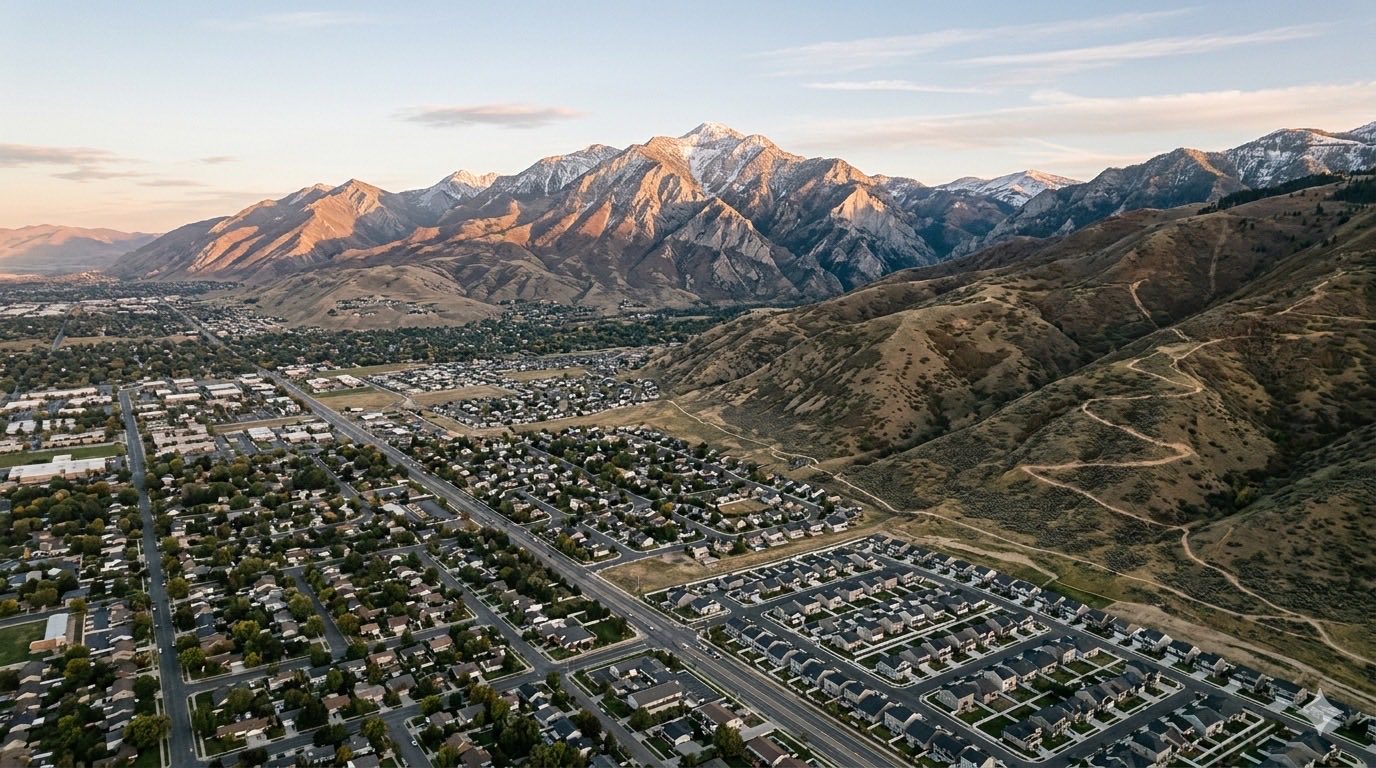
Draper sits at the place where the Salt Lake Valley finally runs out of flat ground. The suburban grid pushes south from Sandy and South Jordan until it hits the sagebrush foothills of the Traverse Mountains, and right there — wedged between I-15 and the mouth of Corner Canyon — is a city that has figured out how to be two things at once. The western half is pure Silicon Slopes energy: glass-fronted office parks, new-build townhome clusters, and the kind of commercial development that follows when a few thousand tech workers need lunch options within five minutes of their desks. The eastern half is something else entirely — winding foothill roads, horse property, lots measured in fractions of acres, and a quiet that you wouldn't expect fifteen minutes from the freeway.
At a Glance
- Median Home Price: $550K–$700K (west), $850K–$1.2M (east foothills)
- Population: ~51,000
- School District: Canyons School District
- School Rating: A+
- Commute to Downtown SLC: 22–35 min via I-15 or TRAX Blue Line
- Nearest Ski Resorts: Brighton, Solitude, Snowbird, Alta (30–45 min)
- TRAX Access: Yes — Blue Line terminus at Draper Town Center
- Vibe: Tech corridor meets mountain foothills — Silicon Slopes energy on the west, horse property and canyon trails on the east
Why Draper?
That duality is what makes Draper work. It's not a bedroom community and it's not a mountain town, but it borrows convincingly from both. Families come for the schools, outdoor people come for Corner Canyon, tech workers come because their office is literally right there, and a surprising number of people come simply because the views from the east side of the city are hard to match anywhere in the valley without spending Park City money.
The population sits around 51,000, which is large enough to support genuine infrastructure — good parks, well-maintained roads, responsive city services — without the bureaucratic bloat or traffic density of a city twice its size. Draper has a civic identity that feels earned rather than marketed. The annual Draper Days celebration in September draws the kind of turnout that suggests people actually like living here, not just that they ended up here.
What It's Like to Live in Draper
The east-west divide in Draper isn't just geographic — it genuinely shapes what daily life feels like depending on which side of Highland Drive you land on.
West Draper is where most of the city's commercial activity lives. The I-15 corridor and Bangerter Highway interchange anchor a stretch of retail, dining, and office space that has filled in rapidly over the past decade. Neighborhoods on this side tend to be newer master-planned communities — clean HOAs, attached sidewalks, homes built in the 2000s and 2010s with the predictable layouts and finishes that come with that era. It's convenient, well-connected, and close to the TRAX Blue Line terminus at Draper Town Center. If you're commuting downtown by train, this is the side of town that makes the math work.
East Draper is where the character shifts. Head up toward the foothills on roads like Pioneer Road or Highland Drive and the lots get bigger, the setbacks deepen, and the built environment starts to thin out. Some pockets still have a semi-rural feel — horses in the yard, gravel shoulders, views that stretch across the entire valley floor to the Oquirrh Mountains. The trade-off is that you're further from the freeway and the commercial corridors, so daily errands require a bit more windshield time.
SunCrest deserves its own mention. Perched on the Point of the Mountain above the valley, SunCrest is technically in Draper but feels like a different world. The elevation gives you panoramic views in every direction — Salt Lake Valley to the north, Utah Valley to the south, the Wasatch Range to the east. The community is master-planned with its own trail system, parks, and a general sense of being pleasantly removed from the valley floor. The catch is the commute: getting up and down the hill adds real time to every trip, and winter road conditions on SunCrest Drive are a known frustration. Residents tend to either love it unconditionally or move after two winters.
Other neighborhoods worth knowing: Cranberry Farms offers a traditional suburban feel with mature trees and an established HOA near the middle of the city. Oak Vista on the east side is popular with families who want a quieter street without going full foothills. The newer developments near 13200 South and Lone Peak Parkway have drawn younger buyers looking for modern finishes with proximity to both the tech corridor and the canyon trailheads.
Schools
Draper falls entirely within the Canyons School District, which separated from the Jordan School District in 2009 and has built a strong reputation in the years since. The district consistently ranks near the top in Utah for academic performance, facility investment, and community engagement — and those rankings aren't abstract to Draper residents. They're a meaningful part of why families move here and why they stay.
Corner Canyon High School is the flagship. Opened in 2013 to serve the southern end of the district, it has quickly established itself as one of the stronger public high schools in the state. Athletics are competitive across the board — football and basketball draw serious attention — and the academic and AP programs have expanded steadily as enrollment has grown. The school's physical plant is modern and well-maintained, which matters more than people admit when they're deciding where to raise a family.
Draper Park Middle School serves the middle grades and feeds into Corner Canyon High. It carries a solid academic reputation and benefits from the same district-wide investment in facilities and programming.
Juan Diego Catholic High School sits on Draper's west side and offers a private alternative with strong college-prep academics and a smaller student body. It draws students from across the south valley, not just Draper.
Elementary schools are distributed across the city's neighborhoods, and most carry strong ratings. The specific school your kids attend depends on your address — boundary maps matter here, so check them before you fall in love with a house. The Canyons District website has current boundary information, and it's worth consulting directly rather than relying on third-party real estate sites that occasionally lag behind redistricting decisions.
Draper Home Prices & Real Estate in 2026
Draper's housing market reflects its dual personality. The price spread between east and west, between the valley floor and SunCrest, between a 1990s rambler and a 2020 custom build, is wide enough that saying "the median price" obscures more than it reveals. But here's the honest picture as of early 2026:
- West Draper and newer developments: $550K–$700K for single-family homes, with townhomes and condos near the TRAX station starting in the $400K–$500K range. This is where most first-time Draper buyers land, and the inventory turns over with reasonable regularity.
- Central and established neighborhoods: $650K–$850K, depending heavily on lot size, updates, and proximity to the foothills. A well-kept home in Cranberry Farms or Oak Vista in this range offers solid value relative to what you'd pay for equivalent square footage in Cottonwood Heights or Holladay.
- East side foothills and custom builds: $850K–$1.2M and up. The lots are bigger, the views are better, and the supply is thin. Properties in this tier don't come up often, and when they do, they tend to move within a few weeks if priced realistically.
- SunCrest: Its own micro-market. Prices range from $600K for a standard lot to well over $1M for the premium view lots. The community's isolation is reflected in slightly longer days-on-market compared to the valley floor, but demand remains steady among buyers who have already decided the lifestyle trade-off is worth it.
New construction in Draper is increasingly constrained. The city is approaching build-out, and the parcels that remain are either infill sites or hillside lots with higher development costs. That scarcity is already being priced in — if you're considering buying, the inventory is not going to get more plentiful.
The planned FrontRunner commuter rail extension through the Point of the Mountain area, expected to take shape through 2030, is widely expected to push property values higher along the western I-15 corridor. Whether that's a reason to buy now or a sign of future congestion depends on your perspective, but it's worth factoring into the long-term calculus.
Draper Commute Times & Transportation
Draper's transportation picture is better than most south valley suburbs, though it still has its friction points.
I-15 is the primary north-south artery and runs along the western edge of the city with interchanges at 11400 South, 12300 South, and Bangerter Highway. During rush hour, the stretch through the Point of the Mountain — the narrow gap between Salt Lake and Utah counties — is one of the most congested corridors in the state. UDOT's ongoing expansion projects aim to ease this by 2028, but for now, budget extra time for any commute that takes you north toward downtown or south toward Lehi during peak hours.
TRAX Blue Line terminates at the Draper Town Center station near 12300 South and 200 West. The ride to downtown Salt Lake takes about 45 minutes, which makes it viable for daily commuters who don't mind the time and prefer to skip the freeway stress. The station area has also become a hub for mixed-use development, which is gradually making that part of Draper feel more walkable.
Bangerter Highway provides a freeway-like alternative on the west side for reaching South Jordan, West Jordan, and points north without merging onto I-15. Pioneer Road and Highland Drive serve as the main east-west connections between the mountain neighborhoods and the commercial corridors.
The honest assessment: if you live on the east side and work anywhere other than the immediate Silicon Slopes corridor, you're looking at a car-dependent lifestyle with non-trivial commute times during peak hours. That's the price of the location. Most east-side residents have made their peace with it.
Things to Do in Draper — Trails, Dining & Local Life
Draper's outdoor access is the single feature that gets mentioned first in every conversation about living here, and it deserves the attention. Corner Canyon is a trail network that most cities would build their entire recreation identity around — and Draper essentially has it in the backyard.
The system connects hundreds of miles of singletrack and fire roads across the foothills south and east of the city. Mountain biking is the headliner: trails like Ghost Falls, Rush, and the Clark's Trail loop draw riders from across the valley. But the network serves hikers, trail runners, and even casual walkers equally well. Potato Hill offers one of the best short summit hikes in the valley — steep, direct, and the 360-degree view from the top is the kind of thing that makes you understand why someone would pay east-side prices. The Bonneville Shoreline Trail passes through and connects Draper into the broader Wasatch trail system stretching north toward the U of U and south toward Lehi.
Corner Canyon Park at the base of the trail system has parking, restrooms, and a staging area that functions as the social hub for the outdoor community. On any given Saturday morning, the lot is full by 8 a.m.
Draper Cycle Park is a more recent addition — a pump track and skills course near the city center that has become a magnet for mountain bikers of all ages, especially families with kids who are learning to ride.
Winter flips the script to skiing. Brighton, Solitude, Snowbird, and Alta are all accessible via Big and Little Cottonwood Canyon, with drive times ranging from 30 to 45 minutes depending on conditions and which resort you're heading to. It's not as close as Cottonwood Heights, but it's close enough that a weeknight run at Brighton after work is entirely realistic.
The dining and retail scene in Draper has matured considerably in recent years, particularly along the 12300 South corridor and in the Draper Peaks shopping center. Even Stevens is a reliable lunch spot. Lone Peak Brewery near 123rd South has become a neighborhood staple for casual evenings. The restaurant options don't rival Sandy's State Street corridor in sheer variety, but the gap is closing, and the proximity to the Traverse Mountain shopping in Lehi adds depth that wasn't there five years ago.
Draper Days in September remains the city's signature community event — a week of parades, rodeo events, a car show, and fireworks that draws residents out of their neighborhoods and into something that actually feels like a shared civic experience. It's earnest in a way that's hard to manufacture, and long-time residents will tell you it's one of the things that makes Draper feel like a place rather than just a location.
Is Draper a Good Place to Live?
Draper works because it offers a lifestyle equation that's hard to replicate elsewhere in the valley. The trail access alone would be enough to justify the location, but combine it with strong schools, a growing tech economy that means many residents can commute in five minutes or not at all, and a genuine range of housing options from TRAX-adjacent condos to estate-sized foothills lots, and the picture becomes clear.
The trade-off is price. You'll pay a premium to be here, particularly on the east side, and the inventory constraints mean you may need patience to find the right fit. Traffic through the Point of the Mountain remains a daily reality for anyone commuting north or south. And the western half of the city, while convenient, doesn't have the same sense of place that the foothills neighborhoods do.
But for families, outdoor enthusiasts, and tech professionals who want to be close to the mountains without giving up suburban infrastructure, Draper delivers. The people who live here tend to stay — and when you spend a Saturday morning on the Potato Hill trail watching the sun light up the entire valley, it's not hard to understand why.
Dig Deeper Into Draper
- Draper real estate market in 2026 — Median prices by neighborhood, inventory trends, and what buyers and sellers should expect right now.
- How Draper compares to Sandy — An honest side-by-side on home prices, schools, commute times, and daily life.
- South Jordan vs Draper — A $150K median price gap and two very different ideas about what a suburb should be.